The Bentway’s growing Safe in Public Space initiative broadens the definition of public safety, addressing new public health challenges and deep systemic inequities to build a new shared social contract for public space.
Safe in Public Space is a multifaceted initiative that aims to broaden the definition of public safety to address new public health challenges presented by COVID as well as systemic inequities, and ensure that there is a shared social contract governing public space access and use.
How do we define public safety and for whom?
Where are safety and accessibility at odds, and how can those conflicts lead to new creative solutions that reshape public space and give people the confidence to re-engage in the city without anxiety?
Through creative experiments on The Bentway’s physical and digital sites; images, ideas, writings, and dialogues from a diversity of collaborators; a new Public Space Fellowship program; and in-depth community consultations, Safe in Public Space aims to arrive at shareable learnings and best practices for spaces city-wide, as well as specific safety commitments for the future of The Bentway.
creative projects
-

A Settler’s Land Acknowledge-ment: Public Space is Colonized Space
As a responsive creator investigating the power of Touch, choreographer Karen Kaeja is curious about what we can touch and cannot touch, and what is seen and unseen in public territory. In a raw live-stream performance that is intimate and up close, the presence and harmony of three womxn of different identities address public safety.
-
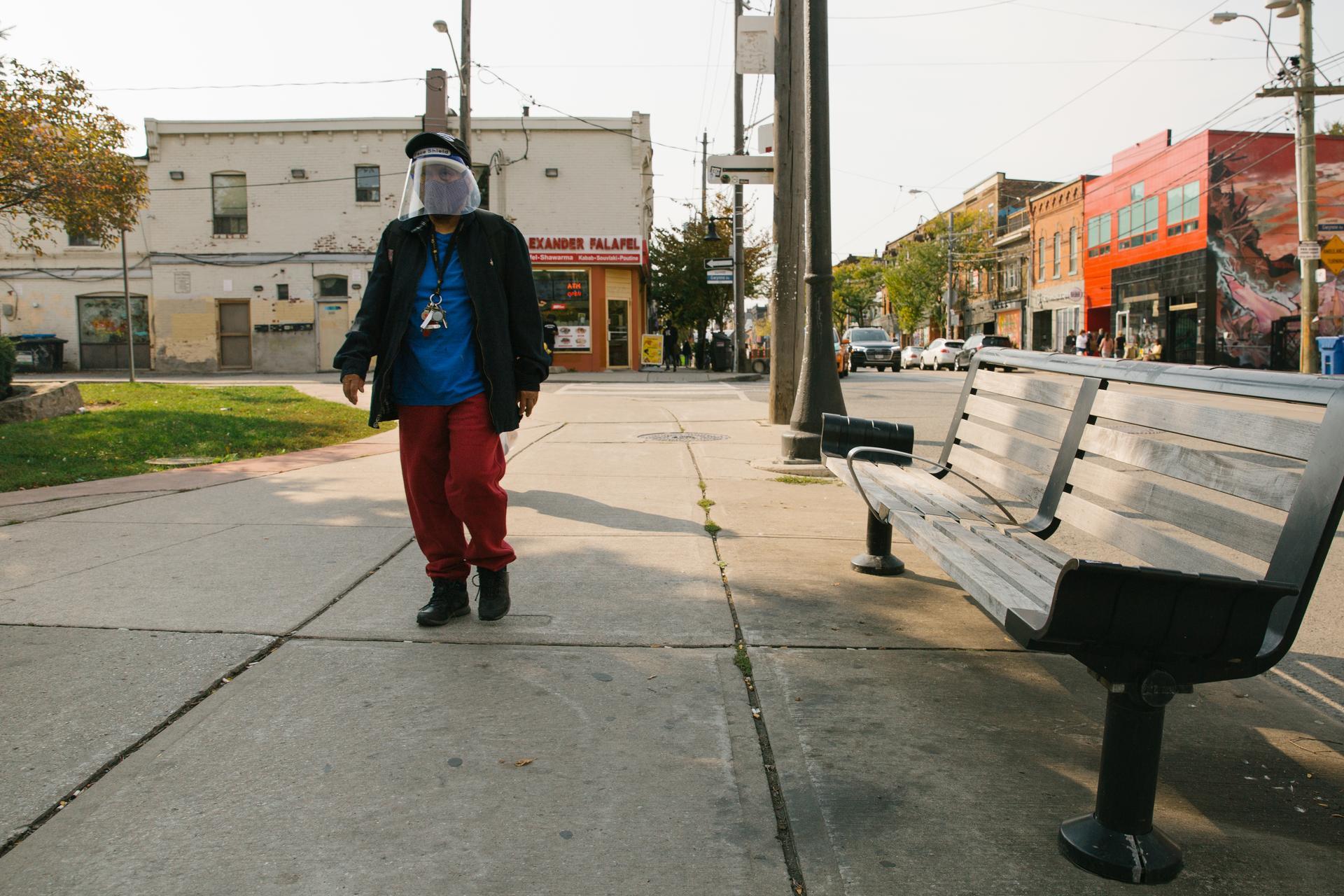
Safe in Public Space: A Photo Essay
Summer 2020Ebti Nabag travels beyond The Bentway to examine how ideas of safety manifest and are communicated in public space through borders and boundaries, signs and symbols, public space architectures, and delineations.
-
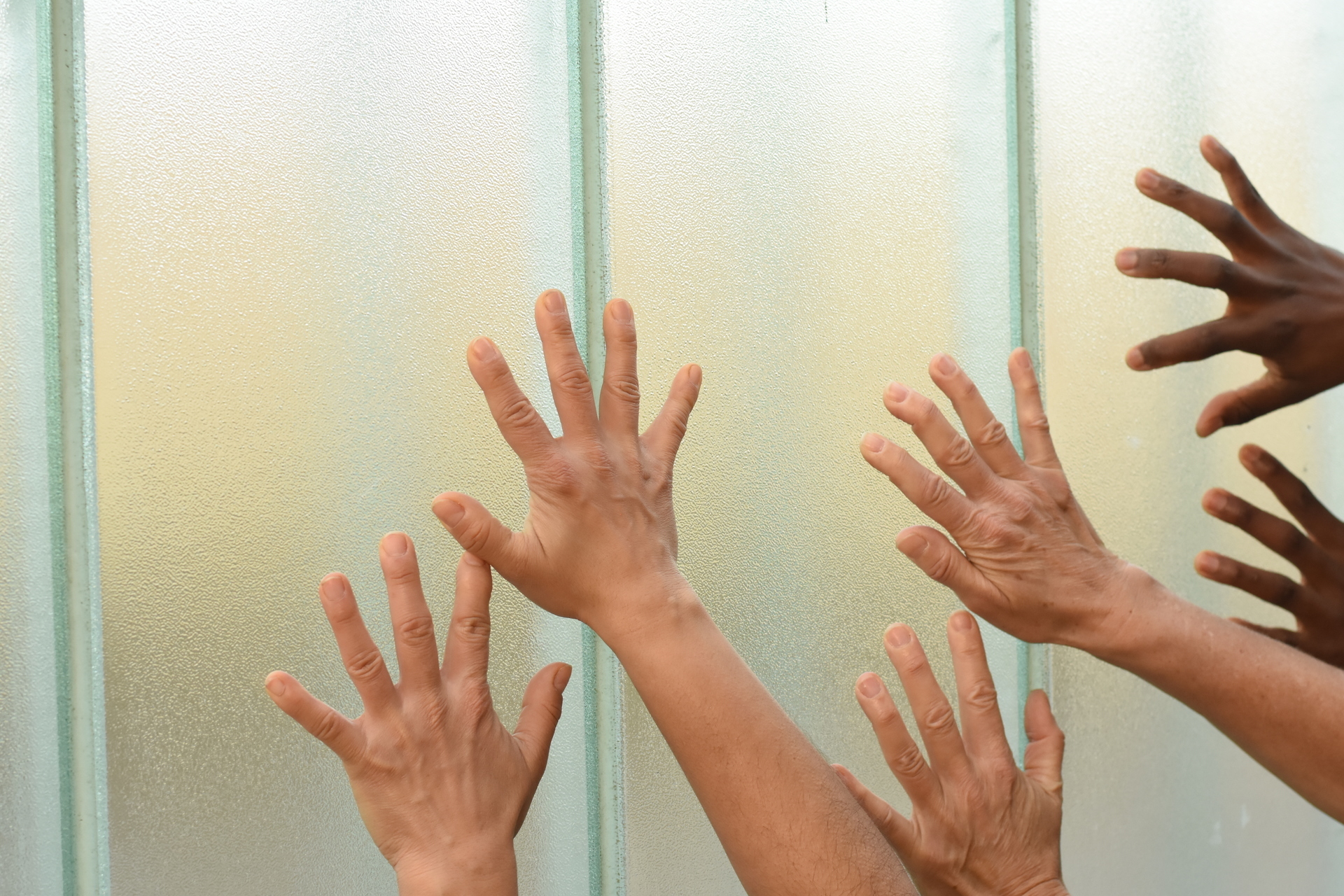
To Be Safe in our Skin
November 2020As a responsive creator investigating the power of Touch, choreographer Karen Kaeja is curious about what we can touch and cannot touch, and what is seen and unseen in public territory. In a raw live-stream performance that is intimate and up close, the presence and harmony of three womxn of different identities address public safety.
-
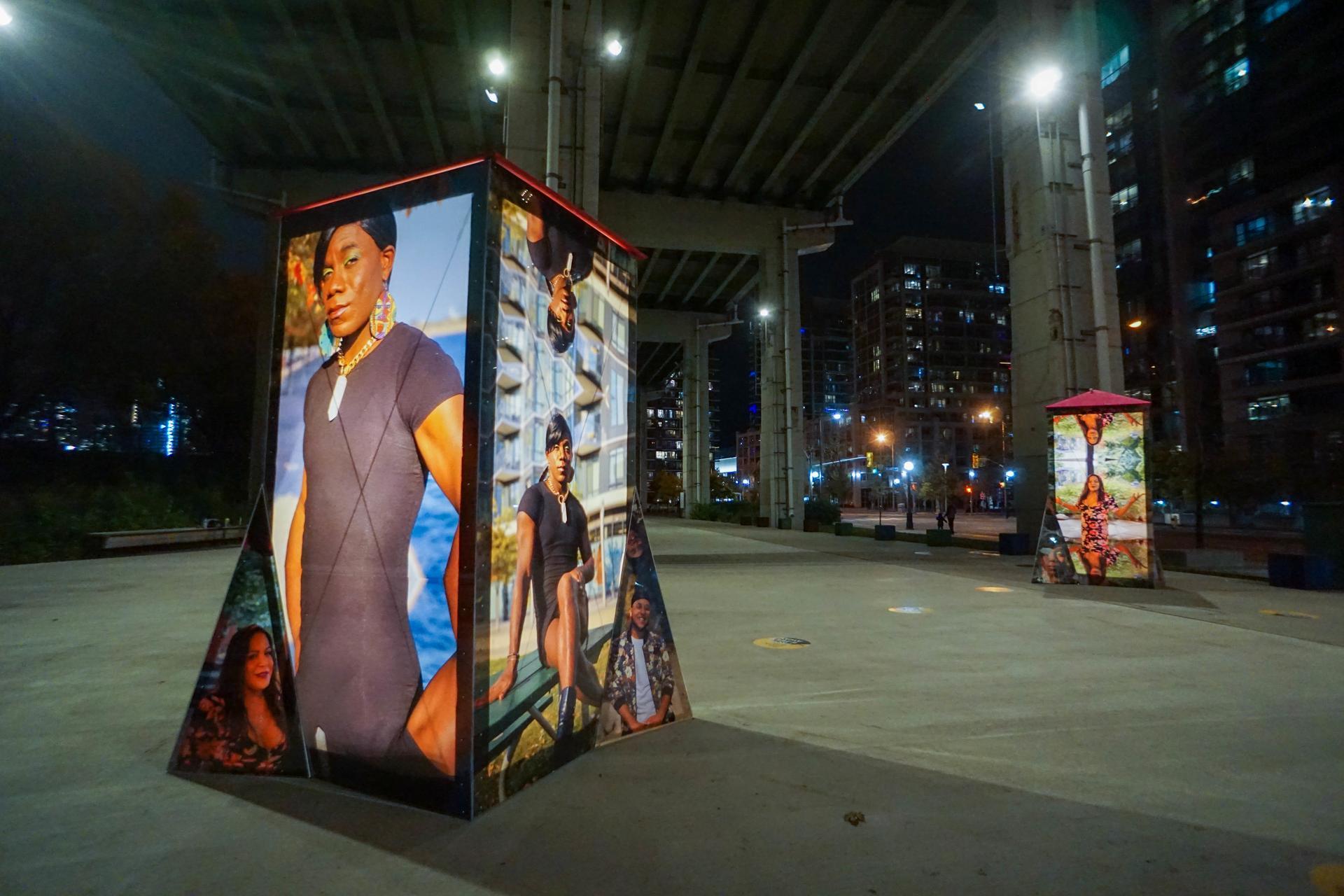
Radical Love: A Digital Exhibition
Summer 2020A multimedia installation that centres Black and Afro-Indigenous Trans women and non-binary people, creating monuments to Trans lives and their survival.
-
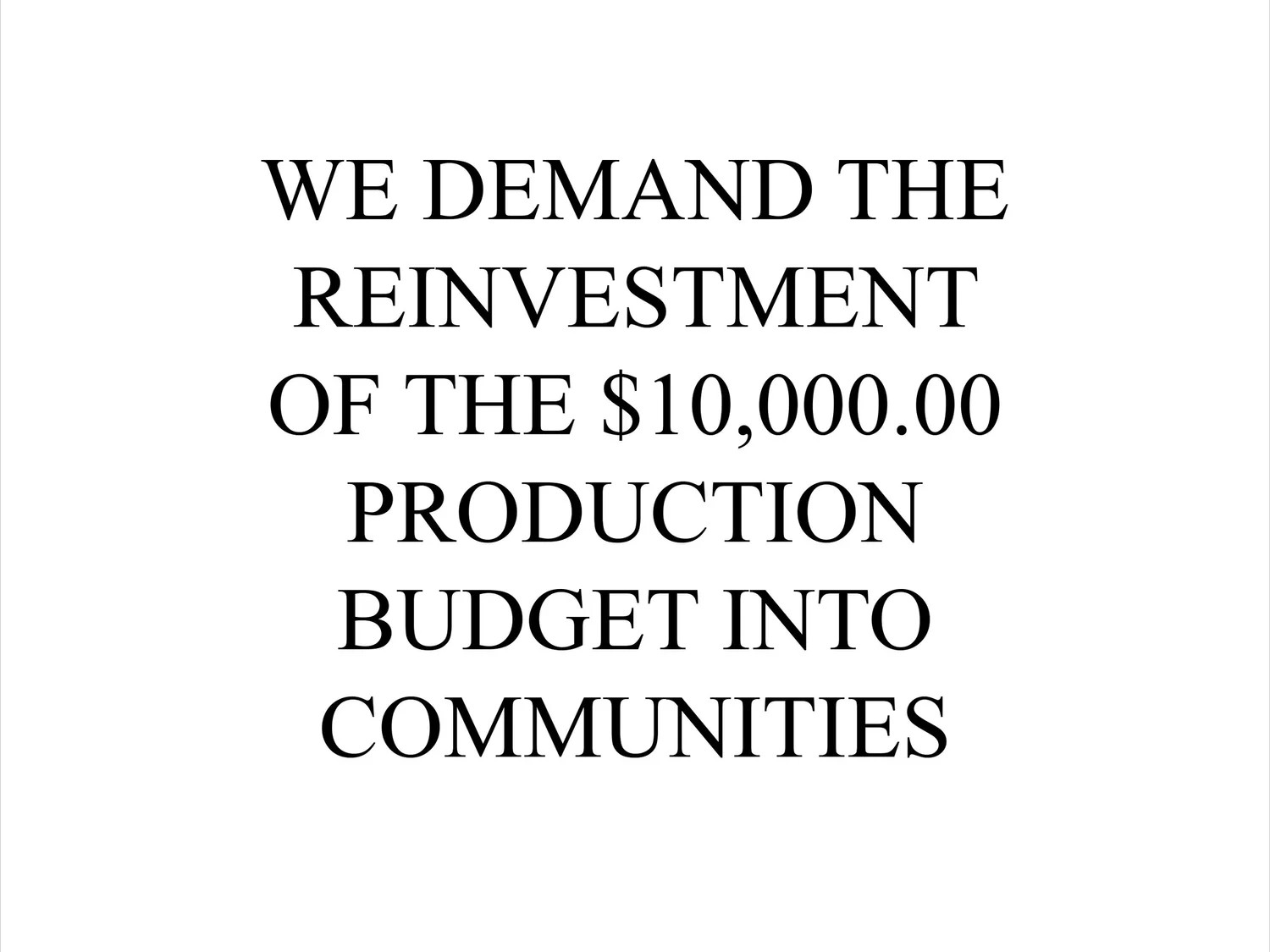
The Bentway as Hostile Architecture
Summer 2020A call to reinvest the work’s production budget into community initiatives by establishing aid networks to disseminate resources to local affinity groups.
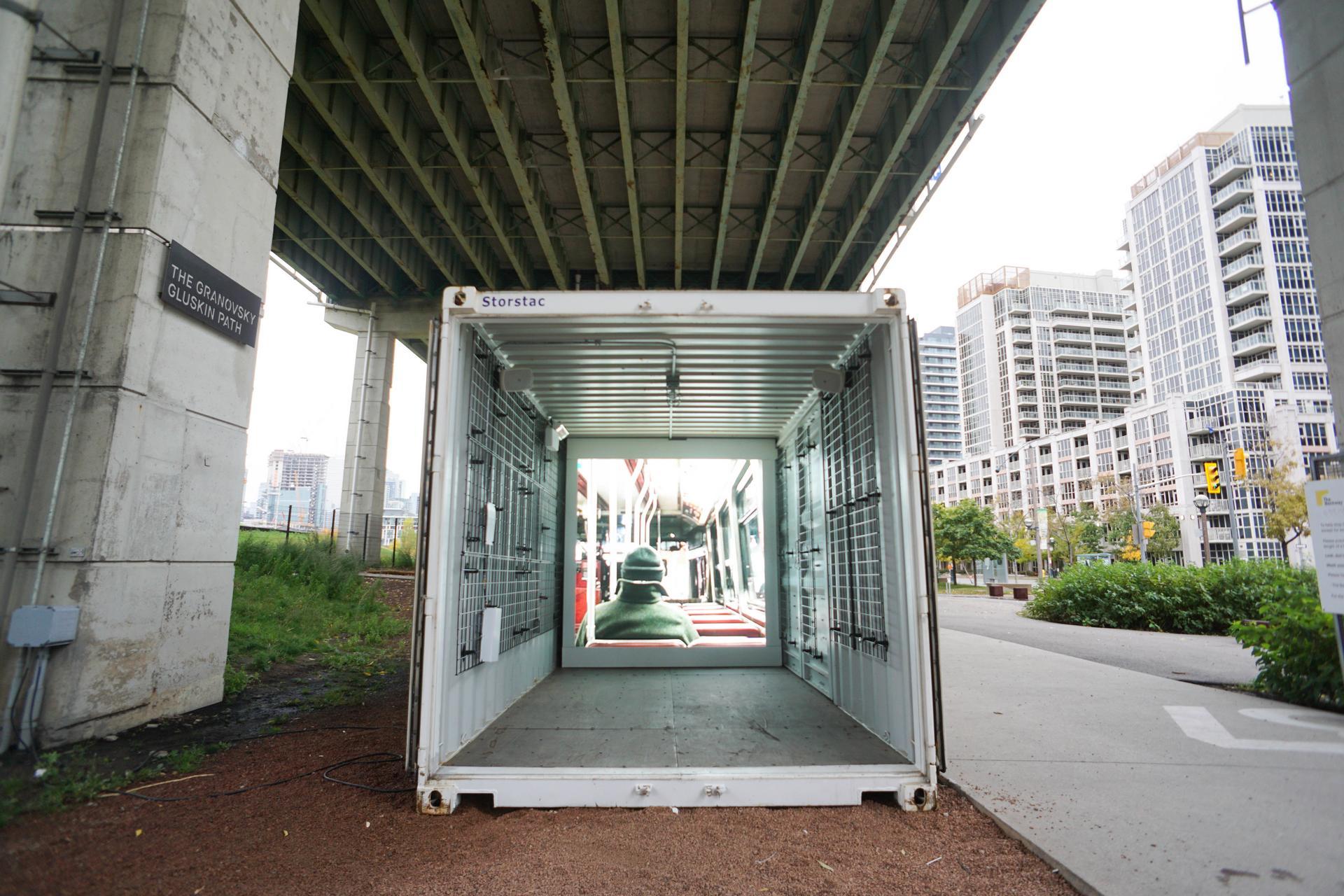
virtual events
-
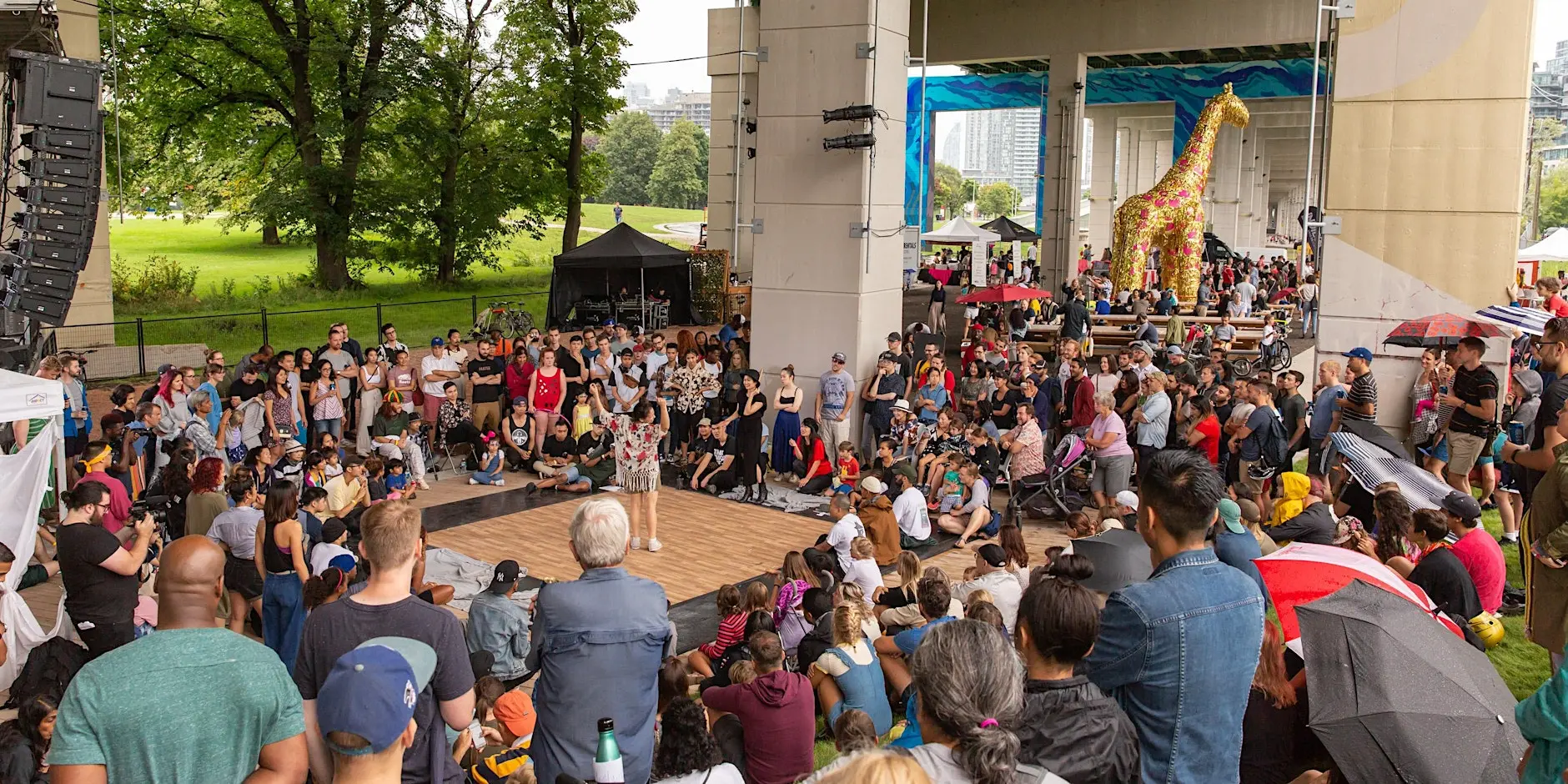
Stewardship & Governance in Public Space
For those who operate, animate and steward public spaces, discussions around safety are contextualized by a range of factors. Where is the space located? What communities have ties to it? And perhaps most importantly, how is the space governed? No longer are public spaces only managed by local governments. Instead, models for governance now span a much larger spectrum. As the pandemic…
-
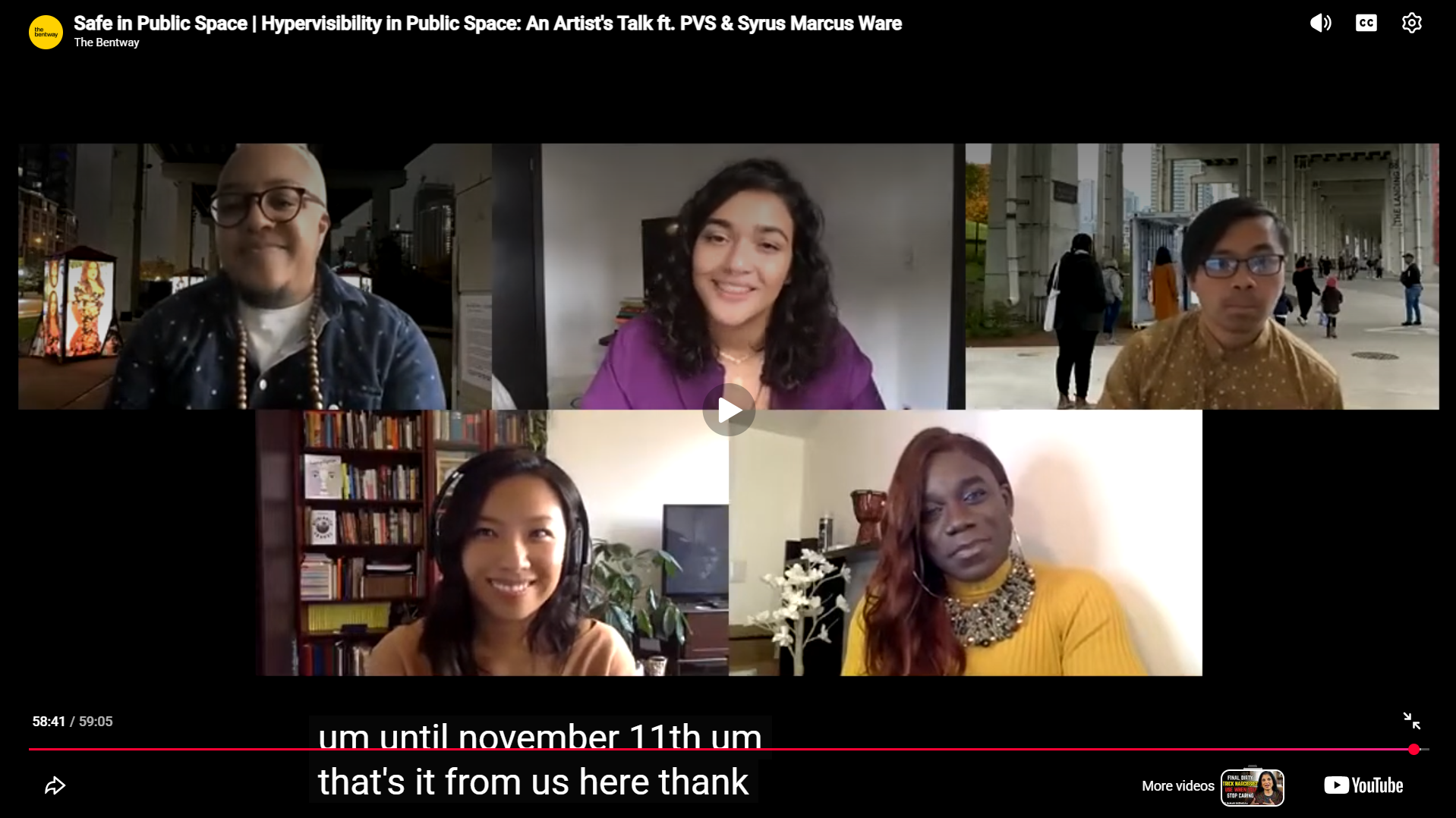
Hypervisibility in Public Space: An Artist Talk with Public Visualization Studio & Syrus Marcus Ware
Click here to watch, listen, or read the transcript: https://www.safeinpublicspace.com/content/hypervisibility-in-public-space As the pandemic continues to unfold, it is clear that vulnerable communities have disproportionality felt the impact of COVID-19. Not only does this dispel the myth of this pandemic as the ‘great equalizer’, but it emphasizes the relationship between parallel shadow pandemics of racial discrimination, anti-Asian xenophobia,…
Making Safe Spaces
What makes a space “safe”? How are feelings of safety determined both from the top down — by bureaucratic factors like land ownership, public space architectures, or the (un)availability of necessary infrastructures and resources — and from the ground up, as cultivated by and for distinct cultures or communities? Here we explore such issues as the public/private divide, particularly amidst decolonization; defensive architecture and design justice in the public realm; public space design as collectively reimagined due to COVID; and the essential creation of safe spaces-within-spaces to serve community needs.
Defining Public Safety: For Whom?
Our appreciation of public safety depends on how we define it, and on whom we’re defining it for. The perception of safety for one individual or community cannot come at the expense of another. Yet, based on our bodies, our identities, and our lived experiences, we may require different provisions to feel safe in shared spaces. Our definitions of public safety may differ. Here we address issues of embodiment and representation in public space; matters of invisibility, visibility, and hypervisibility, and its repercussions; and the performance or “proof” of one’s self and of the encounters that may meet the body in public space.
Public Health + Safety
Both historically speaking and in a contemporary context, there exists a direct connection between public health directives and public space safety. By what measures do we declare a public health crisis, and for whom? How does a “crisis” designation shape spaces, behaviors, and resource-based responses? Here we acknowledge the legacy of public health recommendations on public safety and public space, as well as issues of health equity for at-risk populations, matters of mental health in public space, and the specific impact of COVID on the public realm.
Safety Stewardship/Governance
When it comes to public space safety, who are the decision makers? How is safety communicated, evaluated and enforced? How do institutional structures and biases shape the experiences of a diversity of communities in public space, and how might those experiences differ through a redistribution of resources and power? Here we explore different models of public space governance, community stewardship and specifically youth agency, of traditional safety metrics or measurements as well as renewed systems of accountability for those with the authority to shape public space.
supporters
Safe in Public Space is supported by the Balsam Foundation and RBC.
The Bentway is supported by the City of Toronto, Maxine Granovsky Gluskin & Ira Gluskin, Richard M. Ivey, Frances & Tim Price, Rosamond Ivey, Mazyar Mortazavi & Bita Doagoo, the Ontario Cultural Attractions Fund, Balsam Foundation, Howard Sokolowski & Linda Frum, Donald K. Johnson O.C. & Anna McCowan-Johnson, DiamondCorp, and a growing family of friends and supporters.