Light Toronto Orange
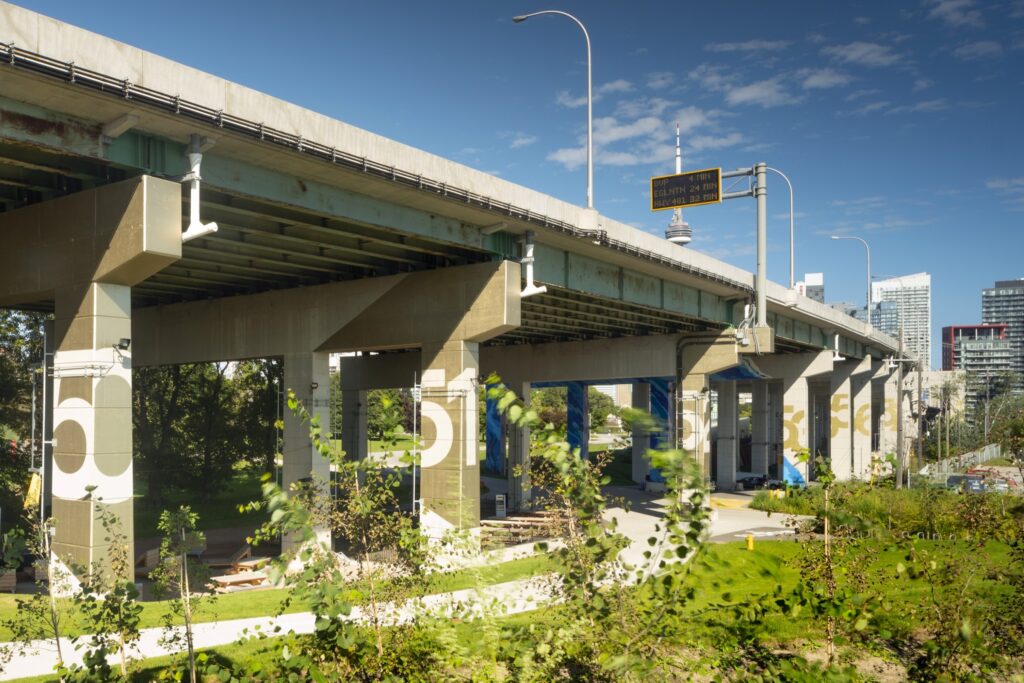
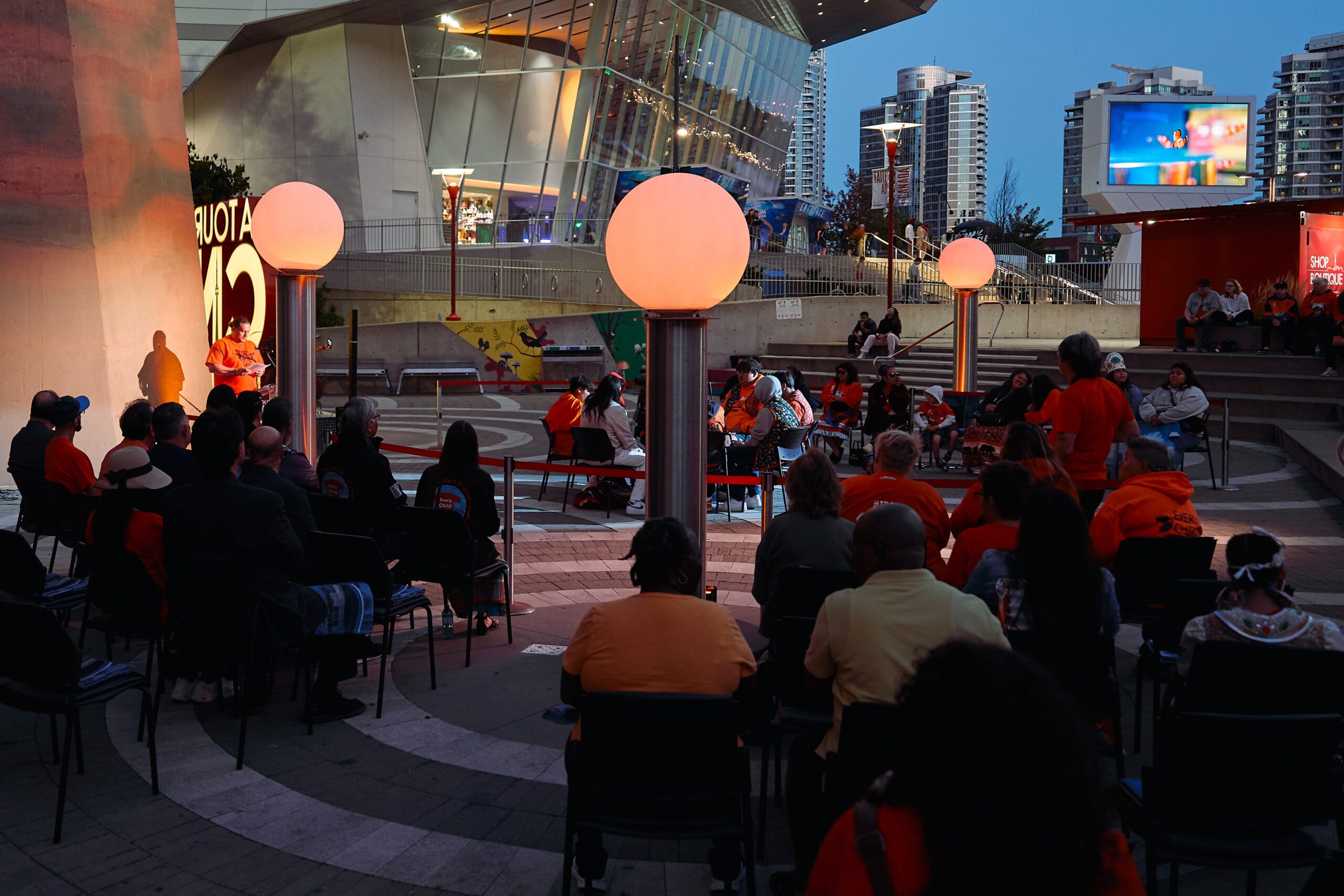
On September 30, 2026, The Bentway Skate Trail and the Canada Malting Silos will be illuminated orange alongside the CN Tower and other sites across our neighbourhood.
Orange Shirt Day, held each year on the National Day for Truth and Reconciliation, honours Survivors of residential schools, remembers the children who never returned home, and recognizes the ongoing work of truth and reconciliation. Inspired by the story of Phyllis Webstad (Secwépemc from the Stswecem’c Xgat’tem First Nation), the orange shirt has become a symbol of the message that Every Child Matters.
A place to reflect
The Bentway’s sites sit within a landscape shaped by generations of relationships to the land and water. The Gardiner Expressway traces a former shoreline of Lake Ontario, whose name carries Indigenous histories that reach back centuries before the province that inherited it. The name Ontario is rooted in Indigenous languages, including Haudenosaunee and Wendat words used to describe the lake and its surrounding waters.
These histories are part of the place where we work, gather, and welcome people today. Recognizing the Indigenous languages and histories held within the names of this place is one way of answering the Truth and Reconciliation Commission’s call to acknowledge what came before us, and to consider what responsibilities we carry forward.
Support Indigenous-led work
There are many ways to continue learning, listening, and supporting the ongoing work of reconciliation. We invite you to mark September 30 by donating to the Orange Shirt Society, an Indigenous-led organization founded by Phyllis Webstad that works to raise awareness of the individual, family, and community intergenerational impacts of the residential school system and supports Survivors and their families.
Light Up the Tower
You can join the CN Tower’s Light Up the Tower event, held in partnership with the Orange Shirt Society, at the base of the CN Tower. The evening will include remarks from Elders and Indigenous community representatives, alongside music, traditional drumming and dance performances.
Spend time with Lake Ontario
The waterfront can be a place to consider our relationship to the land and water, and to one another. This week, Public Pier and Public Trust offer opportunities to spend time in public spaces and reflect on those relationships in different ways. At Public Pier, artistic experiences invite people to gather along the water and imagine new sites for public life. At Public Trust, people are invited to make promises to themselves and one another, reflecting on the value of our word and the responsibilities we hold to each other.
On September 30, we invite you to bring those reflections with you. As you spend time in public spaces and visit the illuminated sites, consider the histories, relationships, and responsibilities that are part of this place.
Learn, listen, and reflect
Truth and Reconciliation is an ongoing process. These resources offer places to begin or continue learning about Indigenous histories, cultures and contemporary experiences, with a particular focus on Toronto, land and water, public space, and the work of building cities differently.
Toronto and Tkaronto
- Indigenous Toronto: Stories That Carry This Place
Edited by Denise Bolduc, Mnawaate Gordon-Corbiere, Rebeka Tabobondung and Brian Wright-McLeod, this anthology brings together Indigenous Elders, scholars, artists, journalists and historians to explore Indigenous histories, contemporary communities and the ongoing presence of Indigenous peoples in Toronto. (Heritage Toronto) - Indigenous Peoples in Toronto: An Introduction for Newcomers
Created by the City of Toronto with OCASI and Access Alliance and informed by Indigenous and newcomer expertise, this guide introduces the histories, cultures and contemporary experiences of First Nations, Inuit and Métis peoples in Toronto. (City of Toronto) - City of Toronto: Indigenous Affairs Office
Explore the City’s Reconciliation Action Plan, commitments to Indigenous Peoples, Indigenous placekeeping initiatives and resources for learning about Indigenous life in Toronto. (City of Toronto)
Land, water and public space
- Indigenous Placekeeping at Biidaasige Park
Explore how Indigenous placekeeping can shape public space through relationships to land, water, ceremony, community and teachings. The City describes Indigenous placekeeping as an approach that integrates Indigenous values and teachings into the design of public places. (City of Toronto) - Toronto Official Plan: Reconciliation
Toronto’s Official Plan recognizes the importance of access to land and water and land stewardship to Indigenous communities, and calls for Indigenous voices to be meaningfully included in planning the city’s future. (City of Toronto) - City of Toronto: Commemorative Framework
A useful resource for thinking about who and what a city chooses to remember in its streets, parks, monuments, plaques and other public spaces. Toronto’s framework explicitly connects public commemoration with reconciliation and greater equity in public space. (City of Toronto) - Indigenous Toronto Research Resource
A free, open-access resource from Toronto Metropolitan University exploring Indigenous histories and contemporary issues through topics including land and housing, education, health, justice and food. (TMP Pressbooks)
Further reading
- Indigenous Toronto: Stories That Carry This Place
Edited by Denise Bolduc, Mnawaate Gordon-Corbiere, Rebeka Tabobondung and Brian Wright-McLeod. - The Reconciliation Manifesto: Recovering the Land, Rebuilding the Economy
Arthur Manuel and Ronald M. Derrickson, with Naomi Klein. A foundational text on land, Indigenous rights, economics and reconciliation. - Indigenous Writes: A Guide to First Nations, Métis & Inuit Issues in Canada
Chelsea Vowel. An accessible introduction to contemporary Indigenous issues, terminology, treaties, land and sovereignty. - The Inconvenient Indian: A Curious Account of Native People in North America
Thomas King. A widely read examination of the relationship between Indigenous peoples and settler Canada. Readers should also be aware that new information about King’s claims of Indigenous identity has emerged since the book’s publication and affects how his work is understood. (Canada’s History) - Toronto Public Library: Read Indigenous
For more books, explore TPL’s annual Read Indigenous lists, developed with its Indigenous Advisory Council, as well as its broader Native Peoples Collection. (TPL)