Marketing and Communications Coordinator Annie DeCoteau Vogelsang recently spoke to design student Rachel Klysen about her new report, The Social Life of Shade, which was developed in partnership with The Bentway across last summer’s Sun/Shade season.
Rachel Klysen is pursuing a Master’s of Design at OCAD University, and completed this report as part of a field placement with The Bentway last summer. Using observational research to draw insights from The Bentway’s Sun/Shade season, the report highlights the intersection between shade and social connection, and the vital importance of reimagining this relationship as city temperatures continue to rise.
Annie (ADV): Can you tell me about what drew you to The Bentway and how this project came about?
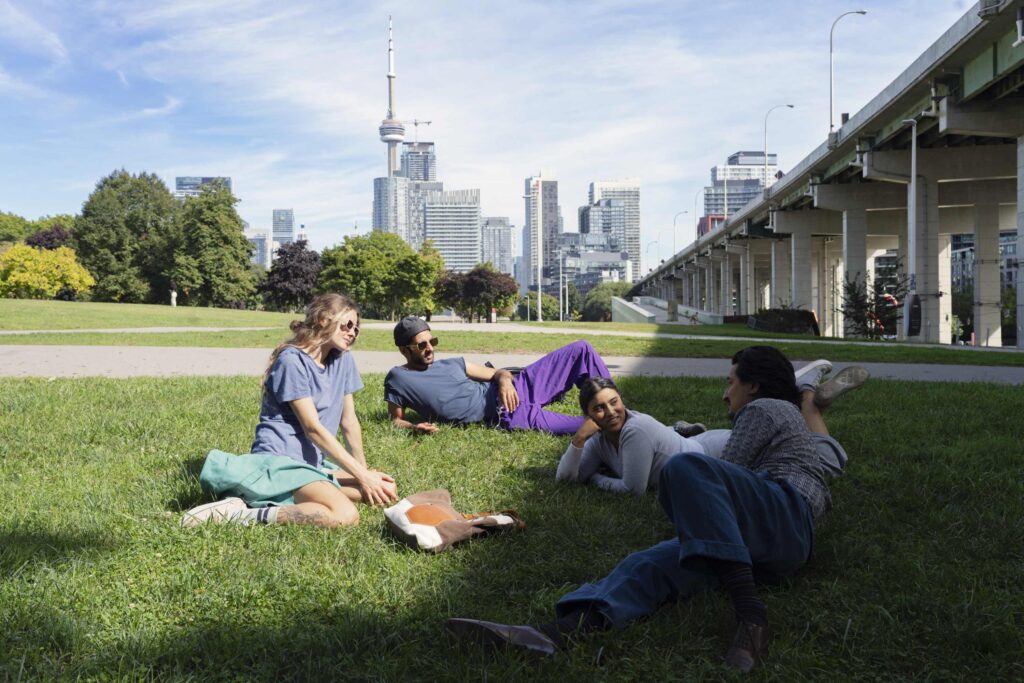
Rachel (RK): I’ve always been drawn to The Bentway as an organization because of the creativity in its work at the intersection of art, design, and programming. It’s visionary to see how The Bentway has taken a space that was formerly seen as inhospitable and animated it into this beautiful place that people want to gather. On a personal note, I’ve been physically drawn to The Bentway site a lot more often recently, after moving to the College and Ossington area last year. I find myself passing under the Bentway all the time to access the water and I’ve had so many nice interactions with the space itself. It has reminded me of the importance of having easy access to a space that activates your mind and gets you excited.
As for the starting place of this project, I’m currently about to complete my Masters of Design at OCADU, where I am studying placemaking efforts and city building from the perspective of social connection. I had reached out to The Bentway because of the prior season, Softer City, which was all about building a more socially connected city. The Bentway’s programming team, who were working on the Sun/Shade season at the time, then introduced me to the idea of shade. From there, we started to talk a little bit about bringing the two concepts together and it evolved into a piece of work that was pretty exciting and innovative.
ADV: Your report is obviously very closely tied to The Bentway’s Summer 2025 season, Sun/Shade. How did working at The Bentway during the season shape your work and perspective, especially because you didn’t start out with shade as the focal point?
RK: What was interesting is that at the beginning of summer, the connection between shade and social connection wasn’t obvious to me. Living in a North American city where a lot of our year is spent in winter, I’ve always viewed the sun as something that connected us, drawing us out of our houses and encouraging us to gather with one another. I was honestly a bit intimidated to start the research, because I was looking at this hypothesis of how these two things connected, but from my own biased position, shade and socializing seemed at odds with one another. But, as I worked on the project throughout the summer, it became clear that the two are almost inseparable.
My takeaway at the end of the season became less about just shade explicitly than about creative approaches to designing urban spaces in a way that both responds to the challenges faced by cities and prioritizes connection between people. Right now, our main response to heat is air conditioning. While air conditioning is a critical resource that many do not have access to, it is a reactive way of responding to a changing climate and in many ways discourages connection. If AC is our only response to hot summers, what we’re going to see is the social retreat that we see in the winter in Canada mirrored in the summers, where everyone opts to stay cool by sticking within their homes. Being given the opportunity to really dial in on shade encouraged me to think differently about how we can react to warming climates and be more disciplined in thinking about how we can adapt the city in a way that encourages people to get together and spend more time outdoors in public spaces.
ADV: Building on that, can you talk a little bit about how you saw the relationship between shade and social connection reflected in The Bentway’s summer season?
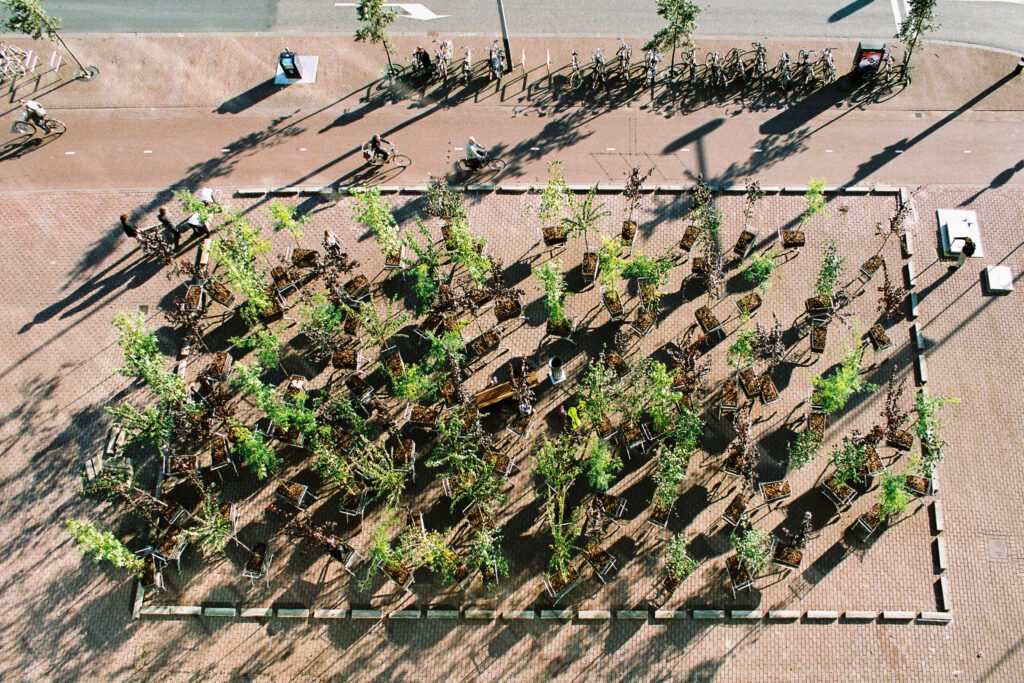
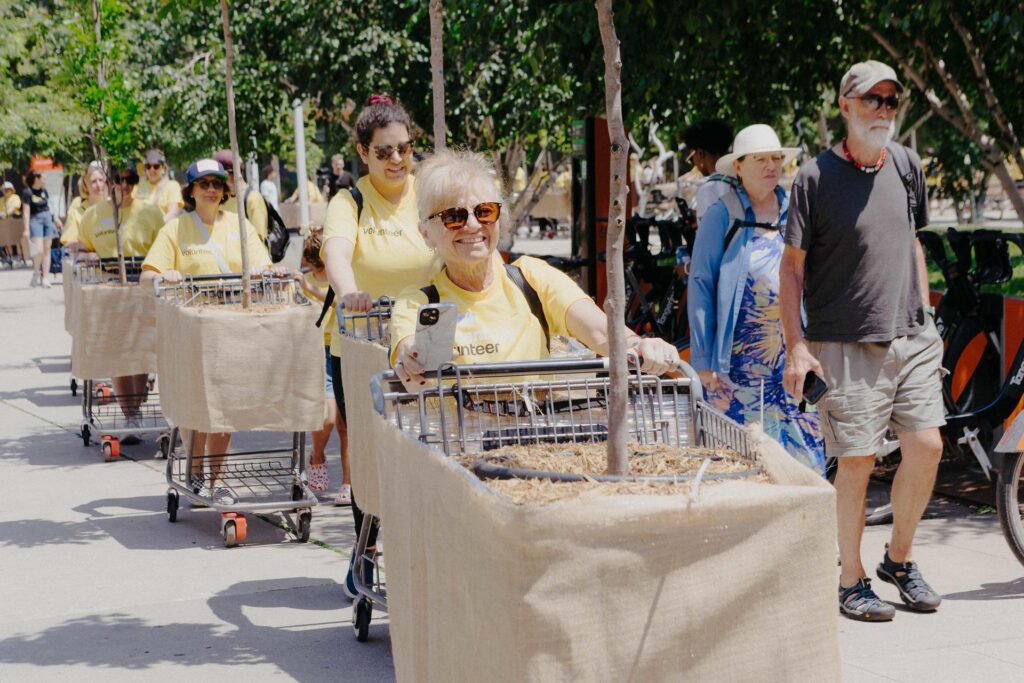
RK: For me, Sun/Shade was all about collective reimagining and bringing together groups of people to explore new ways that we can respond to a changing climate. Unfortunately, the reality is that the climate is warming and we’re going to have to adapt our cities. I loved how Sun/Shade not only encouraged us to think creatively about urban climate solutions through the lens of shade, but to do so collaboratively. During the Moving Forest project, for example, you had people literally pushing trees around the city to visualize and imagine the different places that we could have shade and how much trees change the way that we feel in a space.
ADV: Moving Forest was such a highlight for me. The parades had such a joyful feeling, and even though pushing the trees was hard work, everyone was so happy to work together and do it. It was pretty cool to be a part of. Any other favourite moments from the summer?
RK: I like the use of the word joy as well, and I think so much of the work The Bentway does is rooted in optimism about the future, which is such an important contrast to the overwhelming negativity we’re often exposed to. Not that all the negativity is unwarranted, but I love how The Bentway has this unique voice on imagining what cities could be in a way that inspires a sense of hope. This outlook permeates every interaction that people have in space. One of my favourite moments of the summer was Natalie King’s Seeing Celsius workshop, where we got into groups and made a collective painting exploring the role of heat and temperature. All the people in my group had actually met at one of the Moving Forest parades and then decided to attend another event together. It was so cute that they made the choice to reconnect with one another, and it spoke to The Bentway’s ability to create a common ground for people to make connections while thinking creatively about important issues.
ADV: Pivoting a little bit, can you walk me through your process for collecting data/insights?
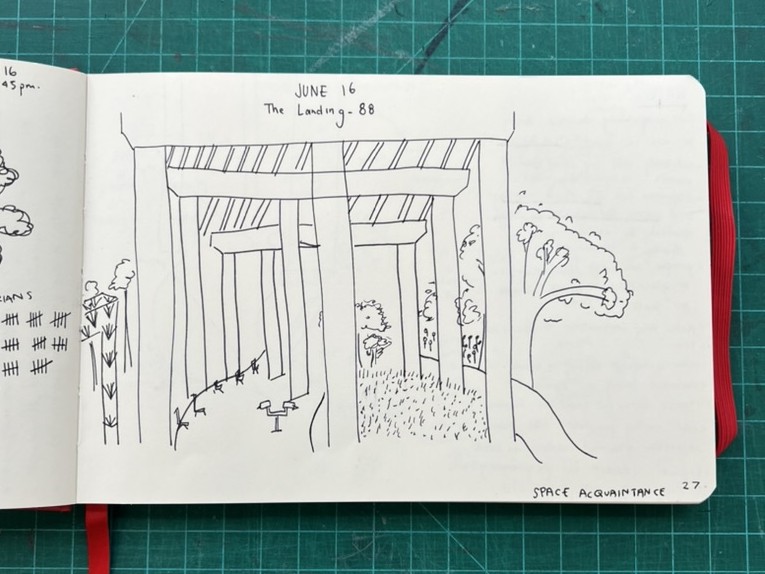
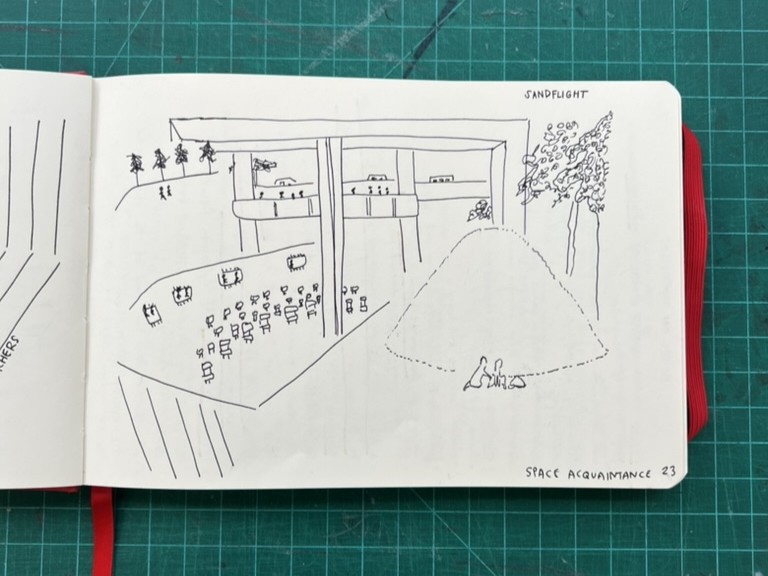
RK: This was my favourite part of the work! I spent the entire summer outside on my feet, exploring the city and The Bentway site. I picked different spaces and events at The Bentway and observed them at different times, on different days, during different temperatures, and during different weather events to see how people were interacting with those spaces and how they were influenced by shade. The intersection of shade and social connection is so underexplored that I couldn’t really start by going online and researching – I had to actually get out there and just start to observe. I also did a lot of sketching and photography to familiarize myself with the space and document how people were interacting with its various features.
ADV: Was there anything that surprised you during this process?
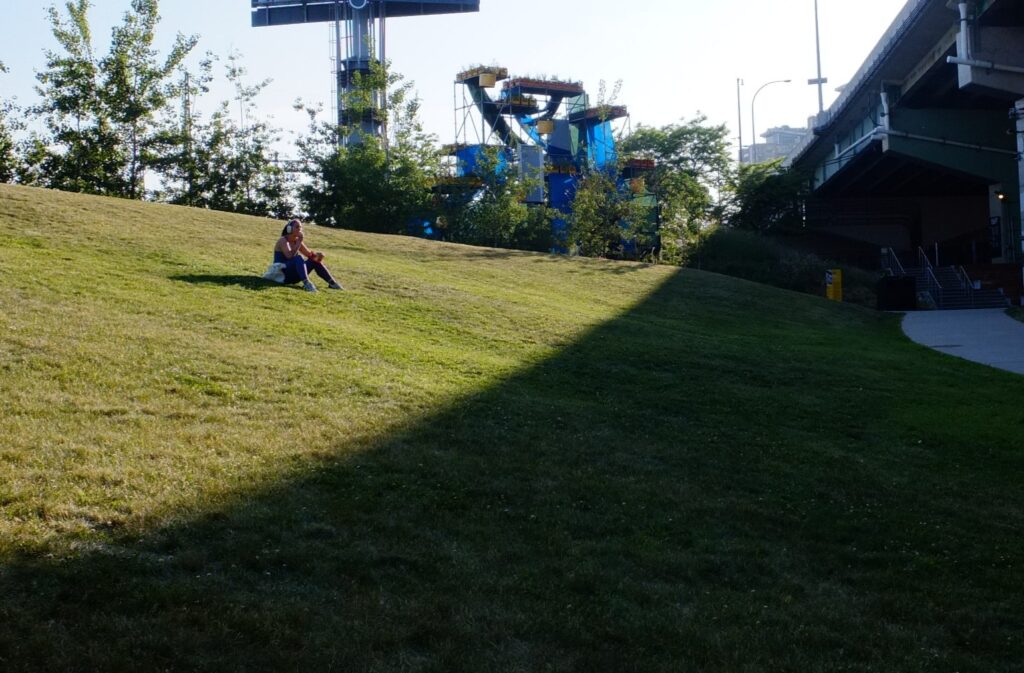
RK: Definitely! I actually captured a photo of a moment that really surprised me, where I observed someone sitting alone in the sun, just beyond the shade cast by The Bentway. There I was trying to prove my hypothesis that people will lean towards shade and social connection, and then I observed this moment that kind of disproved everything I was trying to say in the report. It was a great reminder that every single person is going to behave differently and that people want choice in terms of the way they move through space and access shade. When it comes to designing cities, you need to recognize that every single person interacts with the city differently, and create spaces that allow people to adapt to their own needs.
ADV: To wrap up, what’s your favourite way to use shade as a social force to combat loneliness?
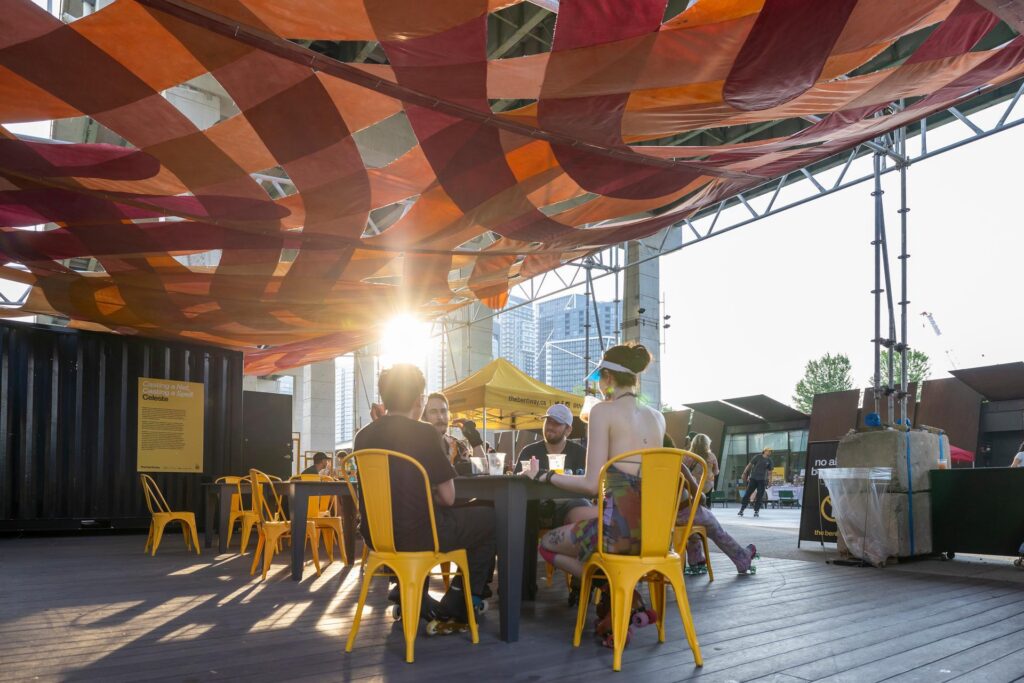
RK: Speaking of creativity, my favourite way to use shade as a social force is by finding creative ways to make shade beautiful. As humans, we are attracted to beauty, and when we can, we tend to gather in places that spark a feeling of pleasure. My favourite activation from Sun/Shade was the Celeste artwork Casting a Net, Casting a Spell. I loved to be underneath it and look up at the colours and see how it would cast fragments of light on the ground. I feel like a lot of our shading solutions are very practical and lack beauty or a sense of joy. Observing how people engaged with the piece and how I felt with it made me realize how much beauty influences the ways that we interact with the environments around us. And I think this can play out in so many different ways – I have an artist friend named Laura Dawe who was commissioned by Grape Witches to create painted floral umbrellas for their patio at Waterworks. From what I’ve heard, it’s one of the busiest patios in the area, which makes sense because if you have a choice between different spaces, individuals are often inclined towards spaces that make them feel good. I really wasn’t expecting beauty to be my favourite way to use shade as a social force, but I think that my work with The Bentway really prompted me to think about shade more creatively, and it’s where I landed by the end of the summer.
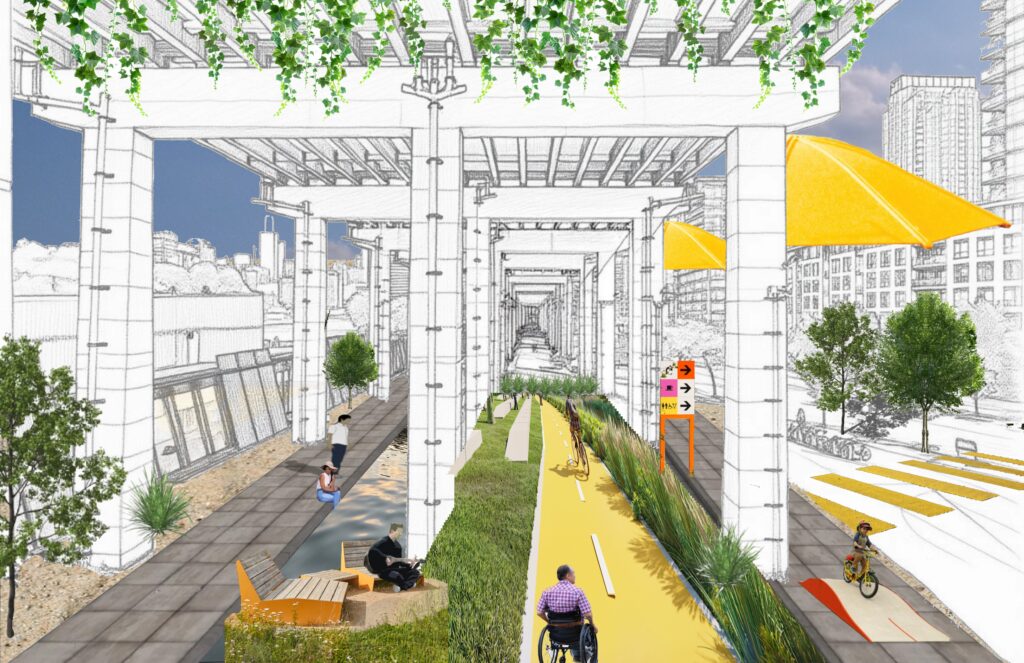
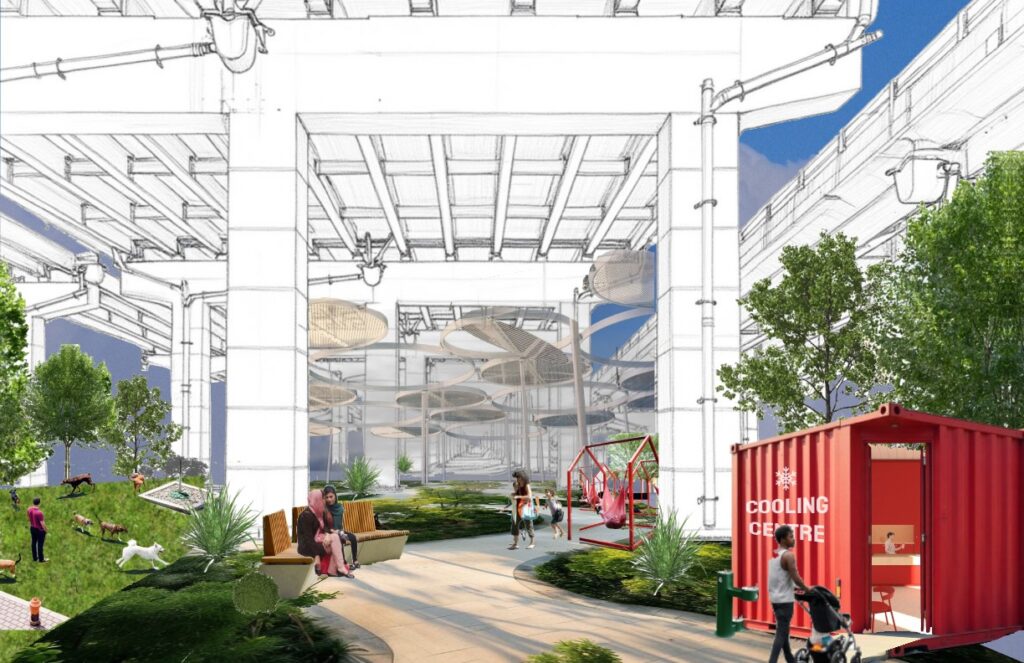
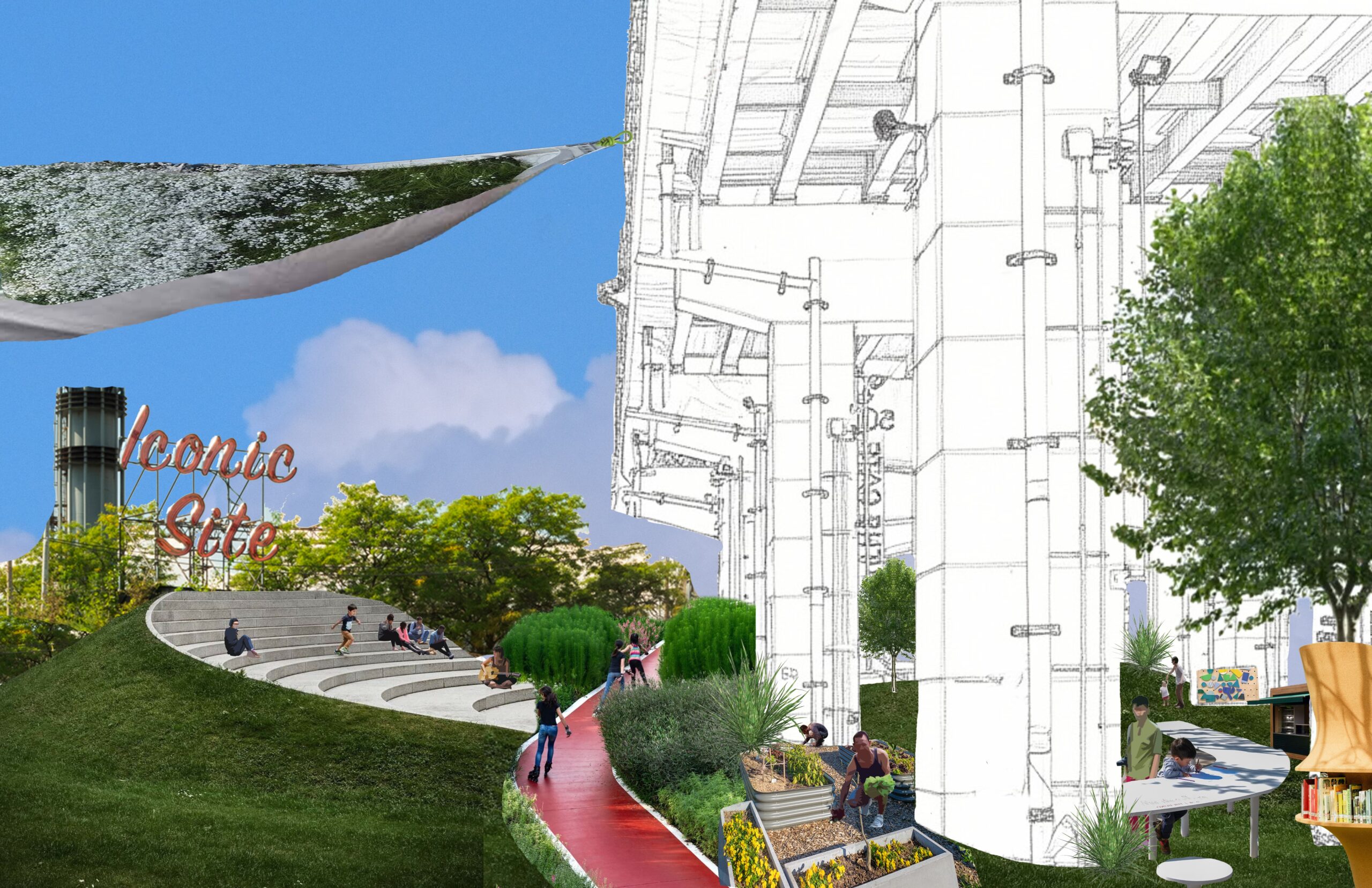
Check out some of the designs and sketches Rachel created as part of her process!