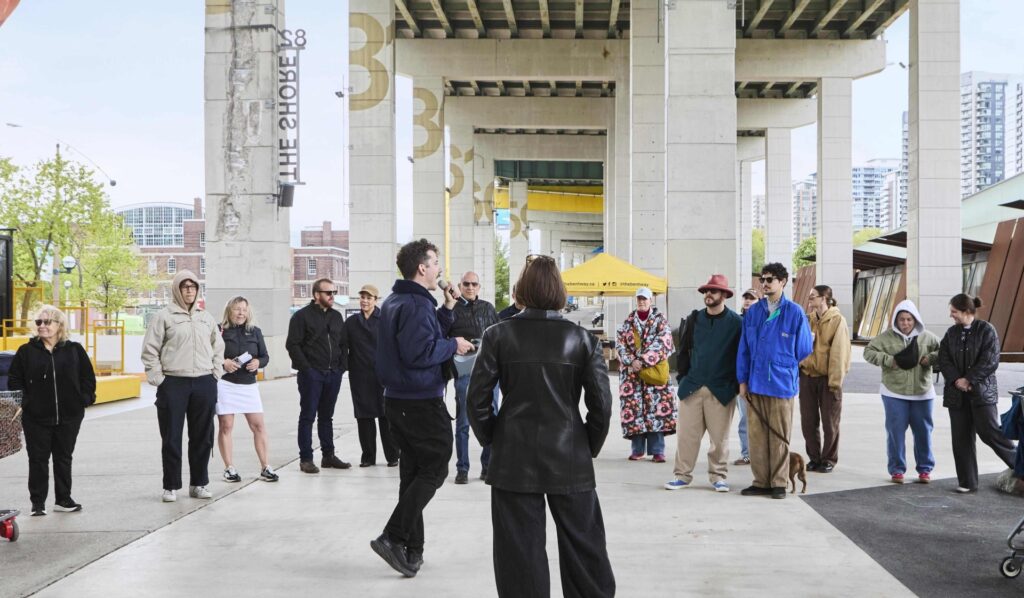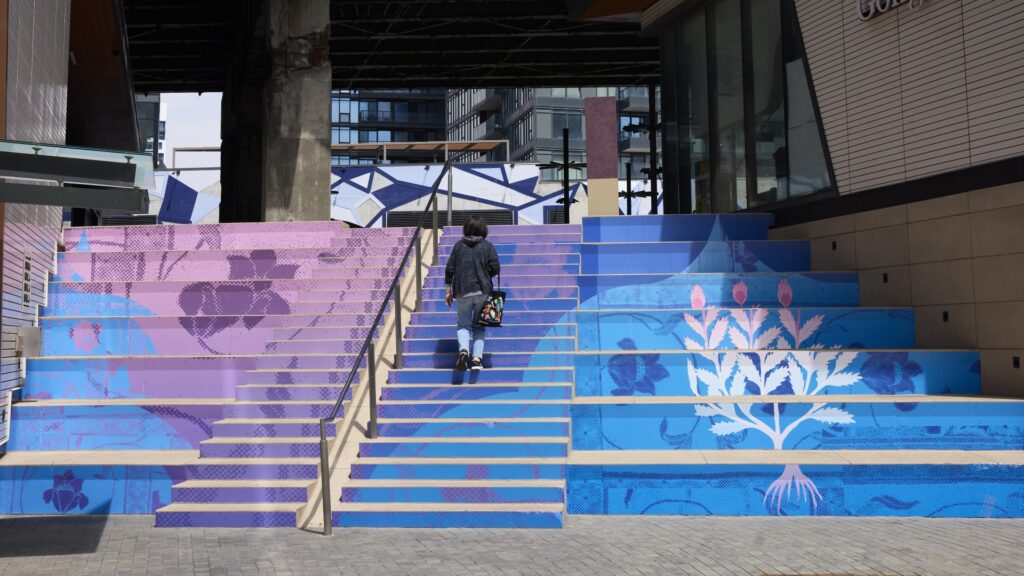
Bentway Staging Grounds hosts the final chapter of its immersive installations, where human silhouettes, native vegetation, and Ontario pollinators invite visitors to reflect on their place within the city. The work blurs boundaries between people, place, and the natural world, revealing the interconnected rhythms of built and living environments.
Located within Bentway Staging Grounds, Toronto-based artist Stanzie Tooth presents A Persistent Crossing, a public artwork that explores the relationship between humans and the urban environments they inhabit.
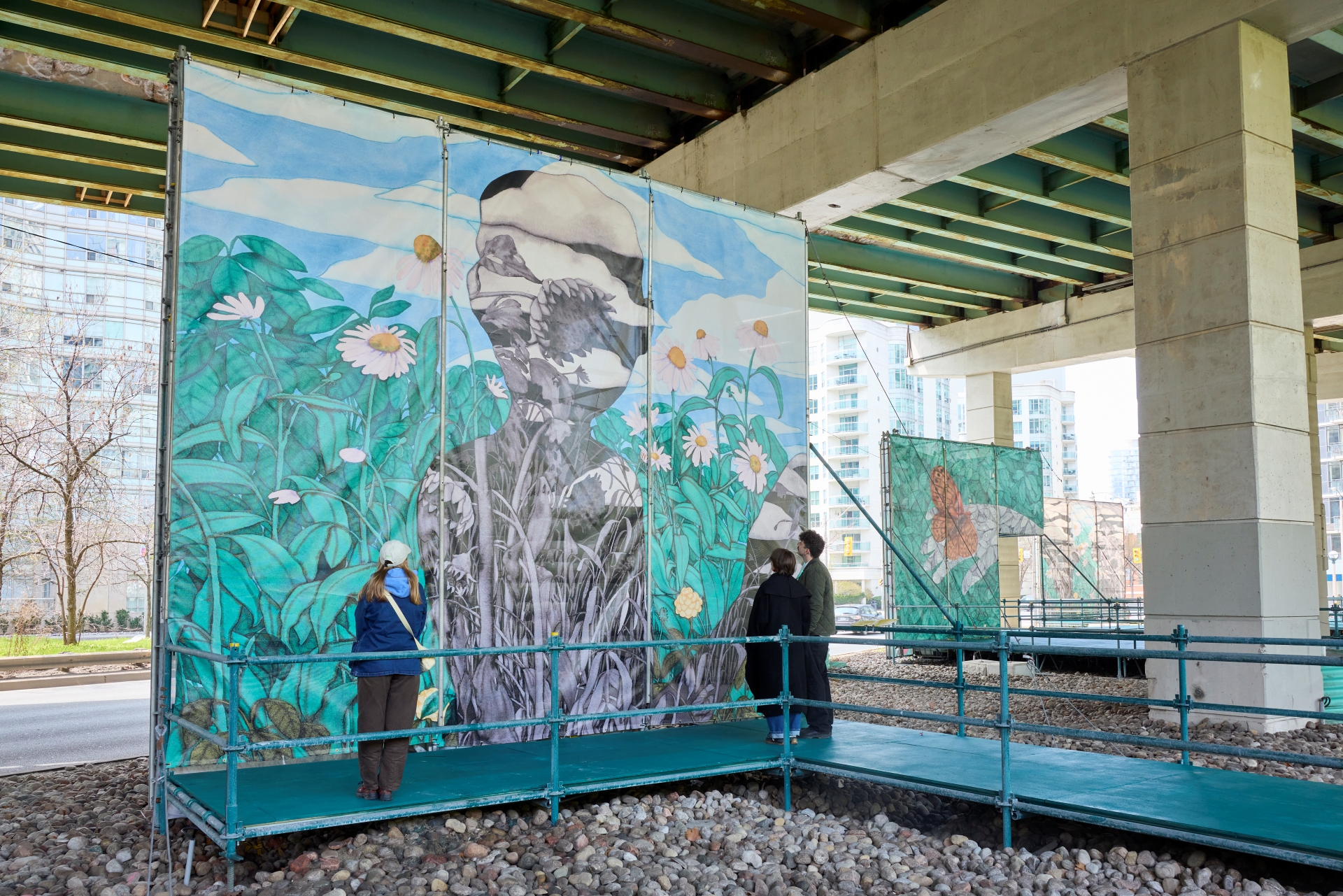
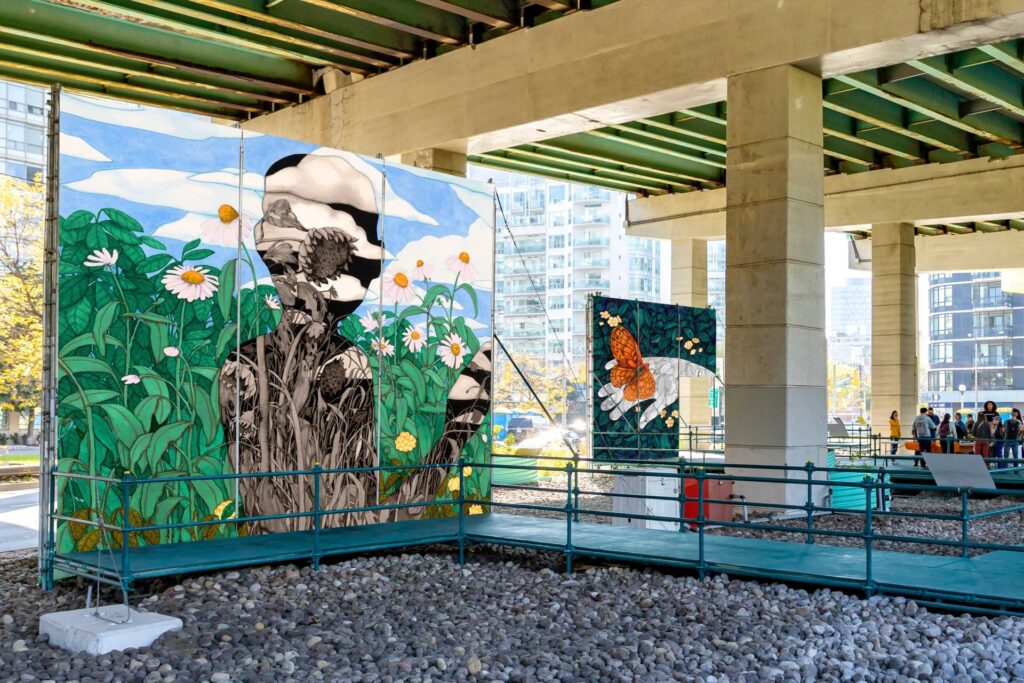
In this final commission at Staging Grounds, Tooth creates a series of images that function as thresholds between the rigid world of Toronto’s industrial grid and the fluid resilience of its urban ecology. Extending her investigation of the figure-ground relationship from the scale of paper to public architecture, the work wraps three sides of the site’s scaffolding towers, inviting viewers to reconsider themselves not as the focal point of the urban landscape but as part of its intricate ecological fabric.
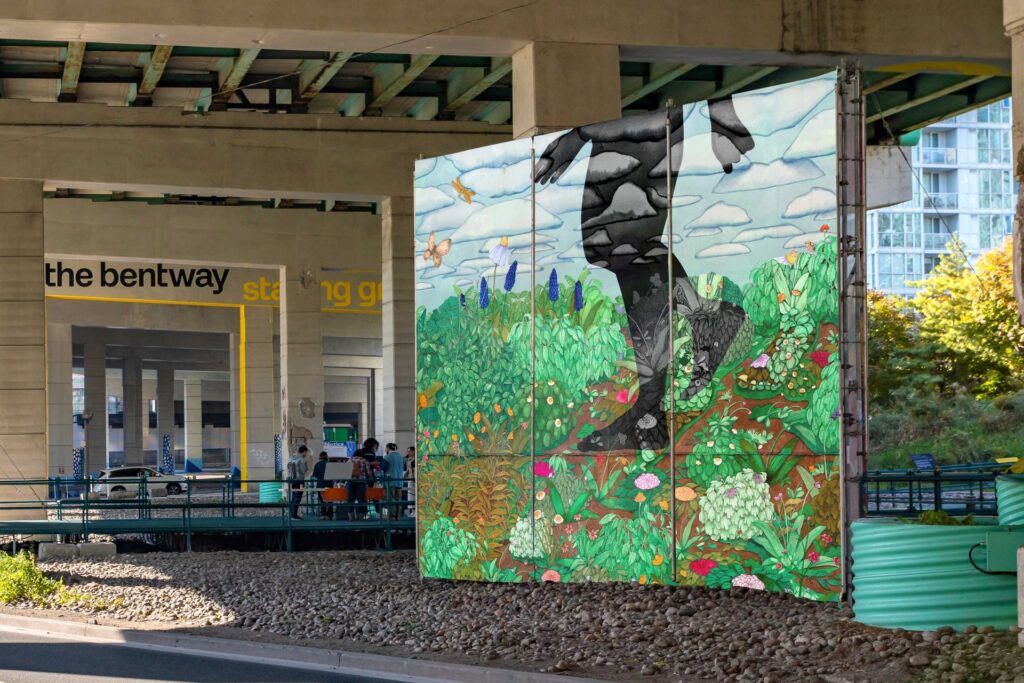
Across the large-scale images, large human silhouettes appear as open spaces filled with native Ontario vegetation and shifting skies. These absent figures act as windows into an alternative landscape within the human body, suggesting a porous boundary between people and place where the figure and ground continually shift. Imagery of local pollinators—including the Luna moth, Cecropia moth, and Monarch butterfly—grounds the work in the ecologies of both the site and southern Ontario. Moving between bright daytime scenes and indigo night skies, Tooth stages the daily urban rhythms of the city underneath the Gardiner Expressway.
Together, these images position the site itself as a threshold between the built and the natural worlds, encouraging viewers to recognize that nature is not something separate from urban life, but a living presence woven through it.
What to expect:
- Visitors will encounter two-dimensional banners suspended on scaffolding around the site, amongst experimental planters that irrigate runoff water from the highway above to water diverse, flowering native plant species.
- Bentway Staging Grounds is a temporary installation featuring a network of ramps and elevated walkways that allow visitors to travel deep into the space as an extension of Canoe Landing Park to the north.
- This site is wheelchair accessible, and there are benches nearby for those that require seating.
- There are no public washrooms at Bentway Staging Grounds. The Canoe Landing Community Centre is nearby and has public bathrooms available during opening hours.
collaborators
colouring book
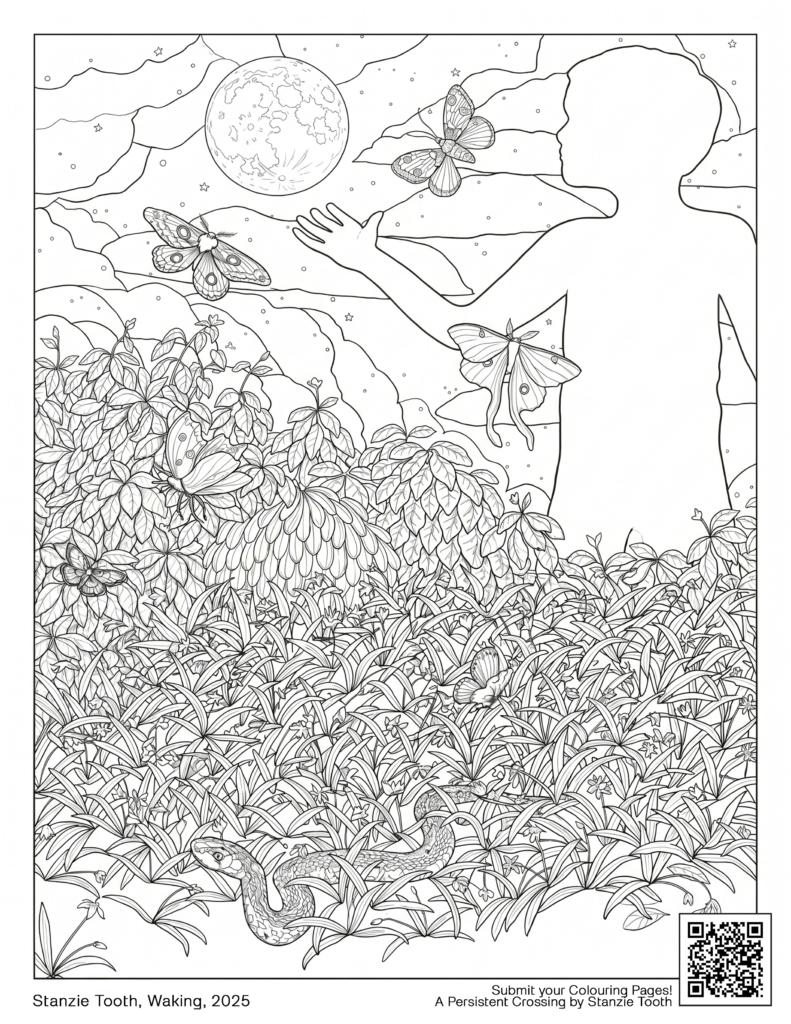
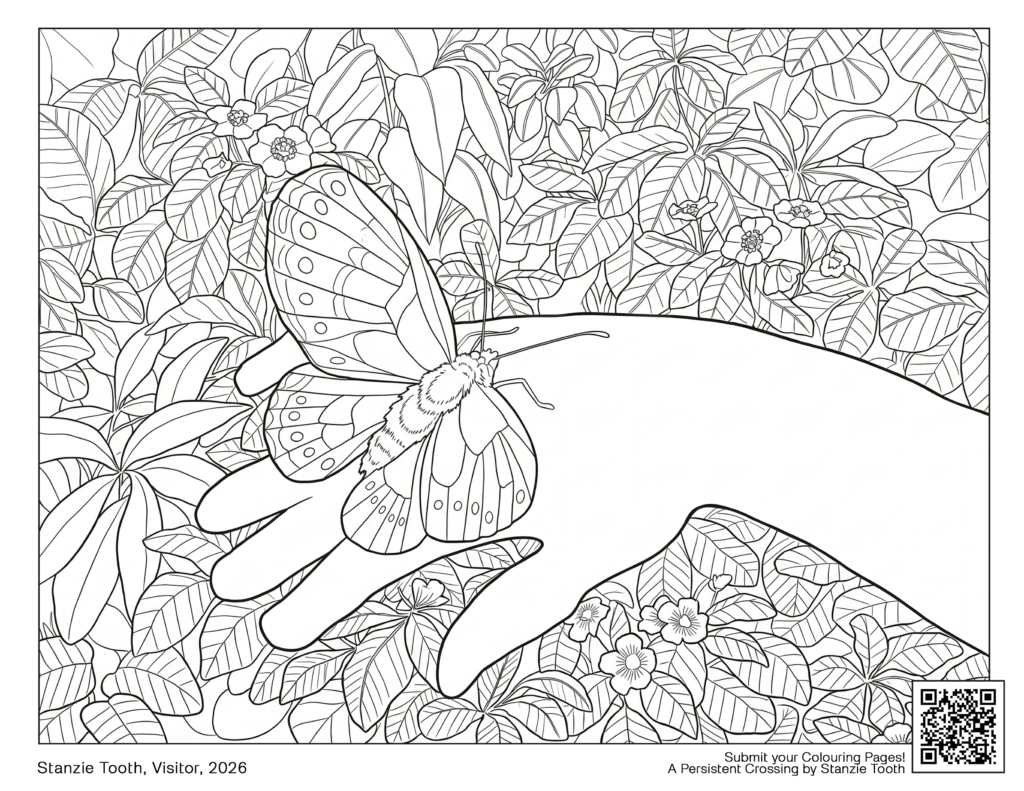
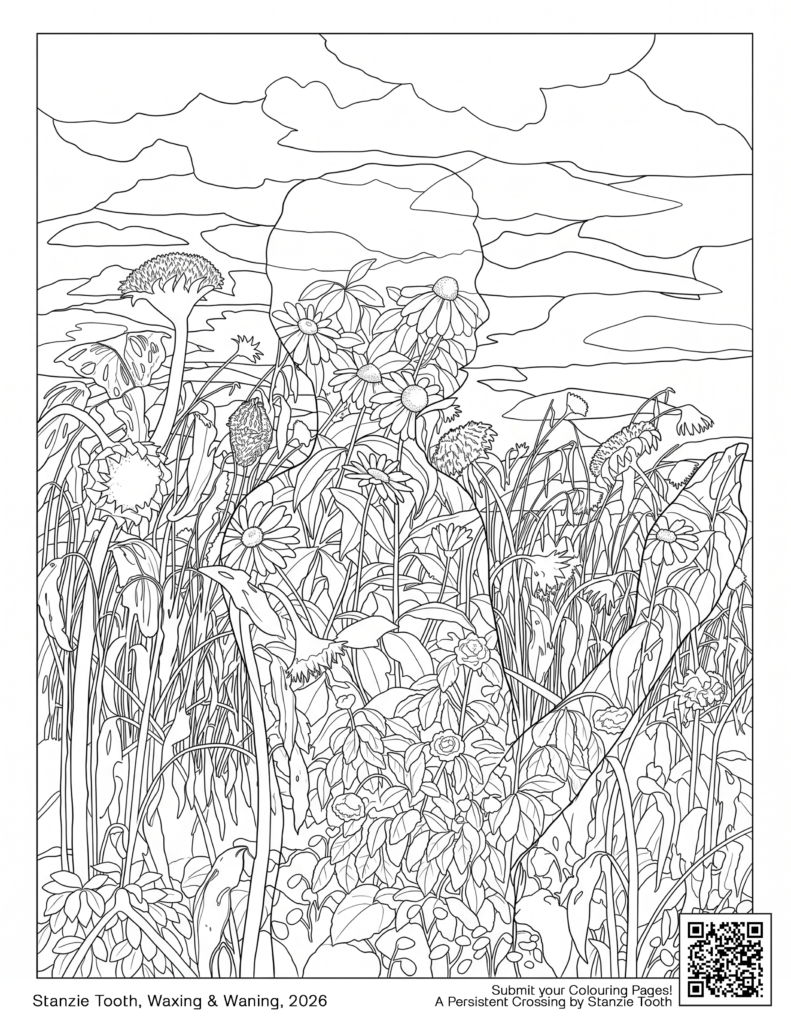
Self-guided activities for youth and families, including colouring sheets inspired by A Persistent Crossing and the Understories Listening Experience, are available online to enhance visitor experiences of Bentway Staging Grounds.
featured species
Fauna (Local Pollinators):
- Monarch Butterfly (Danaus plexippus): A migratory icon of Ontario, representing the fragile threshold of survival across continental distances.
- Luna Moth (Actias luna): A luminous, nocturnal local resident whose short adult lifespan emphasizes the ephemeral nature of our sensory encounters with the wild.
- Cecropia Moth (Hyalophora cecropia): North America’s largest native moth, a resident of Ontario’s urban and rural fringes, symbolizing the hidden grandeur within our local ecology.
- Polyphemus Moth (Antheraea polyphemus): Known for its large “eyespots,” this moth serves as a metaphor for the reciprocal gaze between humans and nature.
Flora (Native Ontario Species):
- Black-eyed Susan (Rudbeckia hirta): A resilient pioneer species that thrives in disturbed urban soils, marking the first stage of ecological reclamation.
- Wild Bergamot (Monarda fistulosa): A cornerstone of the local pollinator community, its intricate blooms provide vital sustenance for migratory insects.
- Common Milkweed (Asclepias syriaca): The essential host plant for the Monarch, grounding the mural’s narrative in the specific biological needs of our local fauna.
- Wild Columbine (Aquilegia canadensis): A delicate, nodding perennial adapted for specialized pollinators, representing the intricate design of the Ontario landscape.
- Goldenrod (Solidago): A late-season staple that provides a vital burst of energy for the ecosystem before the threshold of winter.
- White Snakeroot (Ageratina altissima): A common resident of Toronto’s urban ravines, flourishing in the dappled light beneath the city’s concrete infrastructure.
project team
Curator: Alex Rand
Producers: Danielle Greer and Jeremy Forsyth
Fabricator: Beyond Digital Imaging
Installer: Specialized Scaffolding Services
Special thanks to: Keith Morris
supporters
J.P. Bickell Foundation